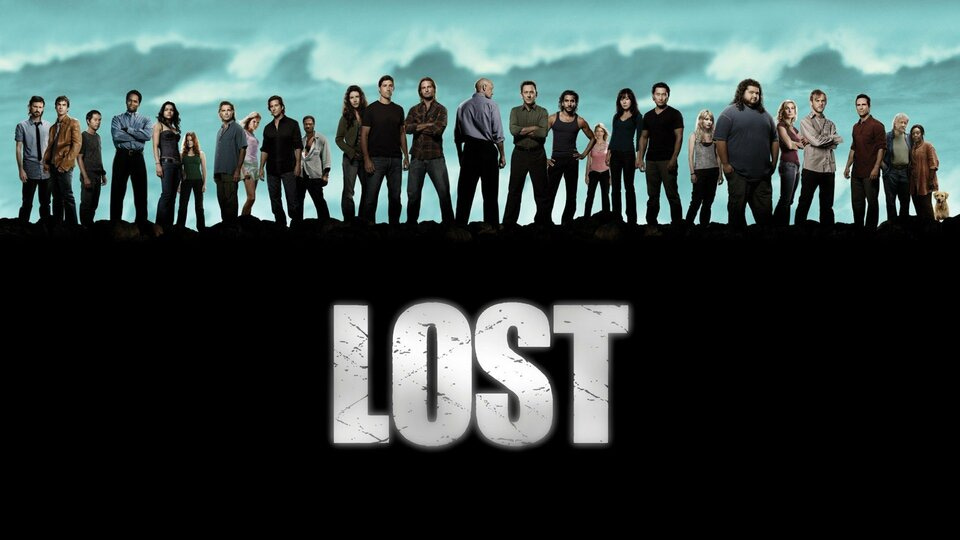
Getting Un-Lost
In 2010, the final episode of the television series LOST aired and it was instantly polarizing to the audience who had been heavily invested in the show for six seasons. I was one of those fans who had watched the show faithfully (this was before streaming, so it was a commitment to be there weekly for one hour at a particular time). If you’re not familiar with LOST, it was the show that launched a serious of television dramas that explored the human experience, incorporating both immanence and transcendence, laced with science-fiction, swirling around a shared trauma.
I have to say that when I saw the finale, I was disappointed. LOST had so many secrets that it had been teasing out across the series, so many unexplained phenomenon, and I wanted the finale to address the logical reasoning behind all of those details, and enlighten me on how all of those strange occurrences could be explained. I had waited for this for six years and my mind demanded it. There were plenty like me who felt sad that our six-year investment didn’t pay off in the way we had anticipated. I left the series feeling disappointed and frustrated.
It would be a few years before streaming services would become the norm and make shows and movies readily available with a couple of clicks. It was probably five years after the finale that I decided to give LOST another chance. There were a couple of episodes I had missed over the course of those six years, and times where I was a little distracted by other things. So I thought, maybe if I go back and watch the entire series again, I’ll see what I missed and the finale will be more satisfying. I was right.
Upon a second viewing, as I arrived at the last few episodes, I could feel emotions building as the stakes of the story swelled. This time around, I didn’t long to have every detail scientifically explained, but instead I wanted a satisfying resolution for the characters in the story. In my second viewing, I had stopped asking LOST to prove to me why its premise worked scientifically, and I had become invested in the story and the characters. I wanted the characters, who had endured years of trauma together after crash-landing on a magical island, filled with all manner of dangerous people and “presences” to experience a satisfying ending. I realized that the storytellers had intentionally inserted a narrative-tension vs. scientific explanation dilemma into the plot. Some viewers tracked the scientific explanation side, wanting every nuance explained or explained away (my initial experience). Some viewers recognized that the unexplained things were simply part of the trauma the characters themselves experience and realized that it’s how the story ends that could redeem all their suffering, loss and death (my second & recently third experience).
I recently watched the entire series a third time. This time, I realized that the storytellers are intentionally forcing the audience to make a choice. Will you approach the story as if it’s a science lesson, or as if it’s a redemptive tale of growing sacrifice and love, where a group of strangers figure out how to live together meaningfully in the middle of dire circumstances.
This realization has moved my thoughts into the realm of the lives of churches and followers of Jesus, who historically have suffered much, but in our Western post-Enlightenment situation, have drifted along with the cultural current, shifting our approach to the Scriptures and to our own lives right along with the culture. For more than a thousand years Western culture has been influenced by Christendom, but now as Christendom wanes, its remaining institutions are being carried along with the cultural current, almost uncritically. We now approach the Scriptures, trying to organize the information and topics in it into logical categories, without truly being invested in the story it is telling and understanding how that story infuses it with meaning and even speaks directly to the part of the story we are currently living in. We go so far as to expect certain portions of Scripture to actually address the scientific questions leftover from the Enlightenment, which only goes to show to what extent we have let the culture dictate our thinking and approach to the Scriptures. We’ve also allowed the culture to dictate our approach to what it means to life a good life. If we live morally, work hard, and attend a Christian worship service weekly, engaging in some sort of “giving back”, then we assume we are doing well, but Acts 2 paints a different picture. What Paul accomplished through the rest of Acts, and how his letters help shape the communities of believers as families looks nothing like what we see today. But we can’t even see that when we look at the New Testament, because we’ve looked at Paul’s letters and seen “random lists of irrelevant topics”, and in doing so, we’ve decided to just take all the random bits and organize them logically, believing, in the end, that we have arrived at Paul’s theology syllabus. But we have missed the fact that Paul worked from the gospel and from a set of teaching around the gospel to help churches do their own theology in their situation.
We must return to understanding God’s story, Jesus’ understanding of what He was doing, and Paul’s clarity on how the churches were to be ordered and what they were to be doing. If we don’t, we will continue to float along with the culture, meandering further and further from Christ’s plan.
We need to get Un-Lost.


