
The Road to Rome
Removing pebbles from our shoes

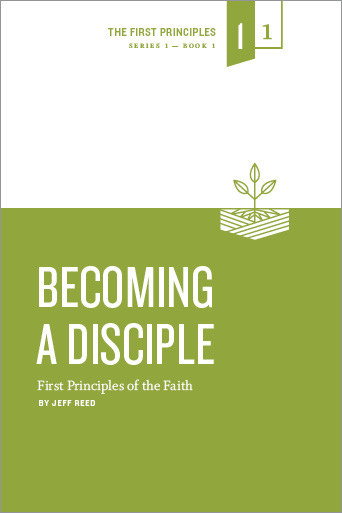
There’s a set of establishing tools I’ve been using for decades to help mature and shape those in our church cluster. I’ve taught through them numerous times. The first study, Becoming A Disciple – First Principle of the Faith, is meant to orient new believers to the entirely new reality that Jesus inaugurated when He was here, and how that new reality was implemented by the apostles in the first century. The first two sessions are around the gospel and baptism. Obvious enough. The third is around the concept of first principles, or the basic, irreducible concepts around which followers of Jesus are to build their lives and shape their understanding. Still tracks. The last two sessions however are about renewing our minds and the lifestyle of a disciple. A bit of a stretch for brand new believers?
For years I’ve gone along trusting these last two sessions were crucially important, but not really having clarity in my own mind exactly why they were important to include right at the beginning. However, for the last seven months, I have been working through another study titled The Story: Grasping the Metanarrative in a Postmodern World. This study has opened my eyes significantly to understand God’s story and better grasp the plan that Jesus inaugurated and that He commissioned Paul to implement on the ground over the next 60 or so years. The plan that Jesus always intended. His perpetual strategy that is to be carried out until He returns.
Because of that, I’ve better understood how the Becoming A Disciple study is structured. I’ll outline it below.
1. The Gospel: recognizing that the gospel is the pinnacle of God’s story that began with Abraham, and that what Jesus accomplished flattened the world, and filled it with new meaning and a new reality, one where He (through the tradition left by the apostles) is building His global family that is networked together as clusters of simple communities who have completely reoriented their old lives and now reflect Jesus’ new reality and who live in anticipation of the day when He returns and finishes setting right the rest of creation. It emphasizes giving up living by the old systems and their rules, because they are no longer relevant and beginning to live according to the new reality in Jesus. (Acts 10:34-38)
2. Baptism: realizing that baptism is a public sign. A sign that we have left the old behind and entered into the new reality in Jesus (the old is done and the new is dawning); and a sign that we are choosing to identify with His new family, those whose influence and commitment have drawn us to Him and who stand waiting to embrace us as we come out of the water.
3. First Principles: the idea that what Jesus accomplished has undone (or taken captive) all the powers (earthly & heavenly) and their philosophies and ideologies and made them obedient to Himself. Because of that, there are a new set of basic assumptions about our lives and the world around us. But we don’t get those downloaded instantly upon trusting Jesus. We have to work at changing our thinking and living, and we must do it together as a community, with leaders present.
(Notice that the first three sessions are basically the great commission. This is what Jesus had in mind when he told the disciples to go, baptize and teach. We see this unfold in Acts, initially as responses to the Spirit’s spontaneous work, and eventually as an entire grand strategy, that if followed, unleashes the Spirit, by its design.)
4. Renewing Our Minds: this follows the understanding that Jesus commissioned Paul to implement His strategy and that what Paul did was to take those first principles (implications of the gospel) and teach the churches how to think and reason using the gospel and these principles, so that they could address any situation they encountered and solve problems on the ground. Since what Jesus accomplished established a new reality, all the philosophies and ideas of the wider world (that each of us grew up with) now must be taken captive and brought into obedience to the new reality in Messiah Jesus. (Romans 12:1-2)
5. Lifestyle of A Disciple: [this one was most difficult for me to grasp. Initially I thought the point of this session was just a “live and let live” philosophy. It took me years to finally grasp what this session is doing.] It is helping new believers to realize they have to let go of the old systems of rules that they grew up obeying or rebelling against. Those are no longer the reality. Jesus has established a new reality around the gospel that puts down or “Old Yellers” all the old systems, their rules and their philosophies. We need to work hard together to break free of those and to help others break free of them and that takes some care, patience, and work. We need to be patient with one another, but also sometimes need to challenge one another to let go of the rules we’ve always lived by and reshape ourselves around the new reality in Jesus’ family. It’s easier for us to make sense of this when we think of the gospel going to pagans in the first century, but it applies every bit as much to those of us who have grown up under some religious tradition of Western Christendom. We’ve got to recover the first principles of the faith, or we will end up just making micro-adjustments to our lives, but never becoming free of the old rules and ways we grew up being loyal to. Where does our loyalty lie now? (Romans 14:1-23)
As Paul prepared to make his journey to Rome, he sat down and wrote a letter to the churches there, to be sent on ahead of his arrival. He had received news of their faith, but not having been there himself, he wanted to make sure that the churches in Rome fully understood the gospel. So he composed an entire treatise on the gospel, and sent it on ahead so that they would have time to read it and think it over and be prepared with any questions when he arrived. His goal was to bring the Roman churches into his field of work, hoping to help them quickly become mature so that they could be a base for Paul to continue on into Spain and so on. He planned to continue this strategy until such a time that he was no longer physically able to continue going. This eventually happened when he was put under house arrest there in Rome. However, even then, he continued to direct network traffic via his coworkers and key leaders, through letters and their visits with him. As he passed near Ephesus for the last time on his way to Rome, he was able to tell the leaders there that he had completed the work Jesus gave him to do and had established them in the whole counsel of God. This is much different than what we try to accomplish when we use the twentieth-century version of the Romans Road gospel presentation, which reduces the gospel down to each individual’s personal sin and their ability to decide their own eternal fate in a split second, but does not end in them becoming part of a new, transformed community in the way Jesus anticipated.
The last two sessions of this study are Paul’s key concerns with churches become mature in the gospel as he set out on the road to Rome. The church today needs to recover this understanding of the gospel, and the types of leaders needed to shape churches in this way. We need to continue walking this road to Rome.
Hi, How can I find out more about your organization of churches?
Okay Scott, because of whom you follow I am going to walk with you. I will pray for Holy Spirit wisdom to pour down upon you and your family. Jeanie Cannon