

Foreword:
“They were kerygmatic in their meeting design.”1
This narrative is written in the style of Robert Banks’ 1985 book Going to Church in the First Century, a short account of what a first century church gathering might have looked like. His brief book was based on his earlier, longer work, Paul’s Idea of Community: The Early House Churches in Their Historical Setting. Both of Bank’s books have been influential on my thinking and practice, along with a number of other scholars, writers, theologians and mentors who have made significant contributions to my understanding of how the early church followed “the way of Christ and His Apostles.” This phrase, “the way of Christ and His Apostles” was coined by Roland Allen in the early 20th century, after his time as a missionary in China, and based on his careful work in the New Testament and his observations and critiques of the state of the missionary movement as basically exporting Western church models around the globe. In his book, Missionary Methods, St. Paul’s or Ours, Allen commented that many pastors and missionaries of his time “have adopted fragments of St. Paul’s method and have tried to incorporate them into alien systems” assuming that in doing so, they had sufficiently followed Paul’s method and found it “unsuited to the condition of present-day missions”, when in fact, according to Allen, they had actually “neither understood nor practiced the Apostle’s method at all.” ““St. Paul‘s method is not in harmony with the modern Western spirit.… We cannot imagine any Christianity worthy of the name existing without the elaborate machinery which we have invented.”2
Allen’s phrase clarifies that he understood that “the way”3, which Jesus himself referred to, is the same as, and can only be understood within the context of, the traditioning and patterns implemented by Paul and the other Apostles.
My stalwart, albeit less accomplished contemporary narrative, is born out of decades of my own study, my 20-year journeyman-type apprenticeship with other leaders in the context a large network of local churches, and my emerging mastercraftsman-like understanding of how we can shape 21st Century churches around “the way of Christ and His Apostles”. My journey began by shaping my own household around those patterns, and then the churches I was working with, and lately by participating with other churches and leaders to reshape their own situations around these patterns. All these situations are still in progress and will take substantial work to remain stable and growing, even as I continue to expand the fields the Lord has given me.
In this narrative, I have combined many stories and situations from across the years and have attempted to frame them in a way that accurately reflects how we have implemented those 1st Century patterns in various contemporary church situations. It is a synthesis of gatherings I have participated in, or have been given first-hand reports of, from the Northeastern United States, the Midwest, Spain and several places in India and other large Asian countries. It is not meant to exhaustively address every possibility, nor to provide a comprehensive biblical framework for the churches’ meeting design, but to be a snapshot of an authentically represented gathering of churches who are working together to function as extended family networks and hermeneutical communities, while processing their own lives and situations through the framework of the gospel and the Apostle’s Teaching in order to address the issues of the culture around them, and to create a “vernacular theology”4 for their particular time and situation, rather than relying on the static propositional theologies and dogmatics of previous generations.
This narrative is written in first-person prose from the perspective of someone who is experiencing this type of church gathering for the first time, and is then reflecting on that gathering and the circumstances that led up to their participation in it.
Scott Canion
…vigorous for the work
Going To Church In The 21st Century

Actually, my full name is Gerald Jonathan Baker. And as of last Thursday, I am officially 70 years old.
It’s a little hard for me to believe, since in my mind I don’t feel a day over forty, but I wake up every morning and my body quickly reminds me, in not-so-subtle ways, that forty was a long time ago. I was born in Flushing, Queens, but when I was three years old my family moved to Kearny, New Jersey and I grew up in that part of northern New Jersey which, although it has its own suburban cultural identity (Taylor ham, not pork roll!), also exists in the shadow of New York City. Many adults from my parents’ generation, and many from my own, made the daily trek into NYC for the better part of their lives.
I was one of those folks. But I retired about seven years ago, from my role as an investigative reporter at the New York Times, so that my wife, Cheryl, and I could travel and enjoy our home and retirement together. Those plans did not work out as we had hoped. Shortly before retiring, we sold our home and moved to a smaller place in the Albion neighborhood of Clifton, NJ. Then within three short months of my retirement, my wife was diagnosed with advanced stage breast cancer. We did our best to get her good treatment and good doctors, but I lost her about two years later. So, I found myself alone, in a new neighborhood, with few friends. Our move had dislodged us from our network of friends, so when Cheryl got sick, we figured we’d be dealing with it mostly on our own. This felt overwhelming, but I had always been good at managing crises, so I threw myself into all the administrative details of her illness and medical care. Staying busy had always been cathartic for me in times of crisis.
However, an unexpected source of help materialized in the form of a neighbor couple that lived a few blocks away, whom my wife and I met a few times during our evening walks. For some reason, this couple made special efforts to keep in touch with us, bring us food during some of the more difficult days and help with rides to some of my wife’s treatment appointments. They regularly mentioned to us that they prayed for us every day. And they even arranged to have meals brought to us by others in the neighborhood during the last few weeks, when Cheryl was in hospice and we had family members staying with us. Honestly, I wasn’t sure how I felt about that. People in the neighborhood knowing our personal business? Were they talking about us with others in the neighborhood? At the time, it made me feel a little uncomfortable, but I gave in because it was helpful having the meals ready for us. Time was so precious during those days that I had no desire to think about making food or even eating it, but I knew I needed to keep my strength up. It was obvious that this couple had a deep concern for us and wanted to help us, and we needed the help. They were around right until the end and even helped me figure out some of the funeral arrangements that we hadn’t yet made.
After Cheryl passed, the husband of this couple kept reaching out to me and stopping by to check on me. He and I had played golf once or twice before the cancer arrived, but I didn’t feel much like playing golf in those days. Honestly, I didn’t feel much like leaving the house. But he kept in touch and eventually he convinced me to get out and play a round with him. Over time that became more of a habit and before I knew it, it became a regular habit scheduled for every second and fourth Thursdays of the month. Soon he invited a couple of his friends join us and in short order we were a regular foursome with a standing tee time.
Since then, I’ve become a regular at their summer BBQ’s and neighborhood holiday celebrations. They’re a very generous couple who do quite a bit for a number of folks in the neighborhood. I particularly enjoy helping out with the grilling. Last summer they bought me a “Grilling Meat Softly With His Tongs” apron to wear when I’m manning the grill. It was an inside joke, as my wife was a huge fan of the Roberta Flack song, although I was always more partial to Miles Davis myself. All this together gave me a real sense of belonging. Somehow they had turned my love of grilling into an opportunity to include me in their “neighborhood family.” I remember that as one of the first times I felt truly normal again.
This couple are Christians. Not that they do the sort of things I associate with other Christian people I’ve known. They were never loud about their faith or caught up in any sort of political activism, (that I know of.) They lived pretty quiet lives, like mine, and seemed to split their time between the people in their church and those of us in the neighborhood. There seemed to be quite a bit of overlap between those two groups, and I have met a number of their church friends at various social gatherings.
Then, last week, after almost a year of them inviting me, I decided to attend one of their weekly Sunday afternoon church gatherings. I have been a few times before, but in the past I always left after the meal time, because I knew that this is their version of a Sunday church service, and I had sworn off going to church when I was much younger after having some very negative experiences. I was a little nervous this time, not exactly sure what to expect. I had no idea what sort of rituals or traditions they might have, and I didn’t want to get caught up in any of that. But after getting to know them well, I felt like it was unlikely to be too strange. And at this point, my curiosity was starting to get the better of me. So, this week I decided to stay for the entire meeting and see what it was all about, mainly because I was curious why these people that I had become close to, felt they needed to host some sort of non-traditional church service in their home each week. Do they really need that in order to add meaning to their lives?
It had always seemed odd to me that their church service was held at a house on Sunday afternoons. My experience with church services is that they are intentionally held on Sunday mornings in a church building, so that everyone can conveniently fit them into their life and then get on with the rest of their day. At least that’s how I remember it when I was younger. However, it had been my habit, for years now, to spend Sunday mornings doing yardwork and the afternoons watching sports, like most other men I knew. And from my experience, most wives spent their Sundays performing a range of tasks, to prepare for the work week, so it seemed like their church service was poorly timed if they were trying to attract more people.
Their house was typical for our neighborhood. A 1920’s Modern English home with a gabled roof. It was a nice sized house, considering its age, and it seems that someone had added a couple of rooms to it over the years, but it wasn’t a large house by any modern standards. Yet somehow, they were able to host this weekly church gathering with about thirty people.
Since I like helping out with grilling, I decided to show up a little early. When I arrived, there were already seven or eight other people there, including a teenage boy who had come on his own to help get things organized and set up tables and chairs in the back yard. My experience was that there was usually a fair amount of arm twisting involved to get a teenager to attend church and usually they were only there to socialize with their peers. But this young man greeted me right away and asked if he could help bring me the meat for grilling. It seemed like my grillmaster reputation had preceded me. I made a mental note to watch for other young people and see who else showed up and how they interacted with everyone else. Maybe I was just out of touch with the young people in our community. I had read in the local paper about how our area was one of the most diverse in the country. The article mentioned that there were eighty-six different languages represented in the student body. Maybe all that immigration had made a positive change on the next generation that I didn’t realize.
Even though I knew about the diversity of the high school, I didn’t expect to see that sort of diversity at this meeting, but as more people started arriving, there was an odd mix of people that didn’t quite make sense to me. First, I noticed several “white” families who I assumed were native New Jersians, but then I heard them speaking with thick Eastern European accents. I couldn’t tell if they were from some former Soviet bloc country or somewhere in the Balkans. Whichever it was, only the teenage kids spoke perfect English. The parents had difficulty communicating but still seemed genuinely interested in being there. The wife of one of the families had two large bags of laundry, and she promptly went down to the basement and started doing her wash. That should have clued me in to the fact that this church service was a horse of a different color. Then a middle-aged Asian woman showed up with a couple of other women. They seemed to arrive as a group. It was obvious this woman had cognitive challenges, but everyone greeted her like she was a regular part of the group and didn’t seem to make any distinction between her and the others who were there.
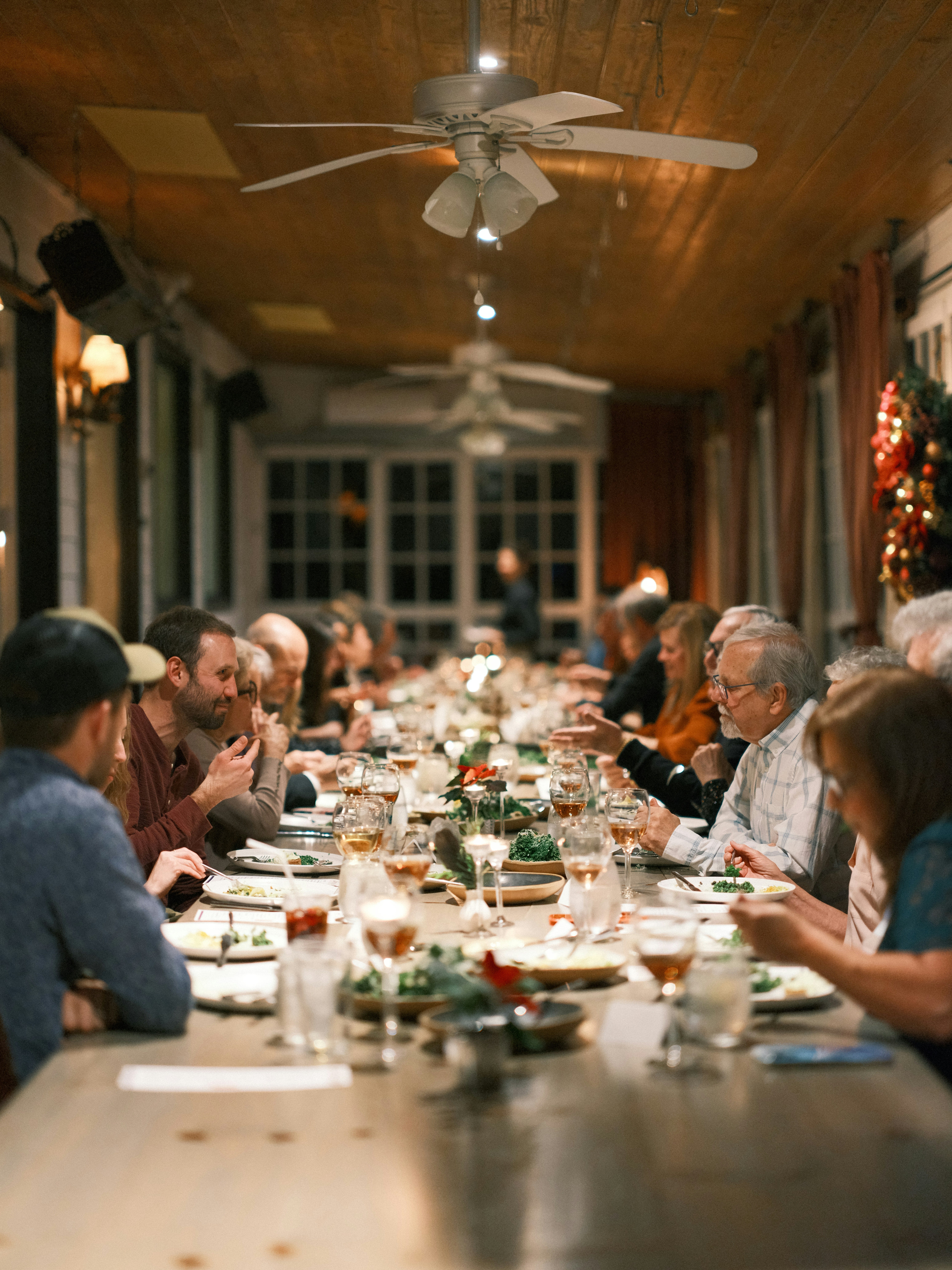
Soon it was time to eat, and a man I had never met before called everyone together. It seemed strange to me that my friend, whose home we were at, wasn’t the one taking charge. This man got everyone’s attention and then announced that it was time to eat and asked if some of the teenagers could make sure the elderly women got served first since it was difficult for them to make their way up to the food table. Once they had their food, about ten minutes later, everyone sat down and began eating. Then the same man from earlier stood up and asked everyone to pause, and together, take a bite of food, and then he explained that at the beginning of the meal each week, they pause to “break bread” and remember that “Jesus’ body was broken to make us whole… to make us a family.” I guessed that this must be their version of Communion but then right away, he asked someone to pray and then everyone just went right back to eating and talking across the table. I wondered what happened to drinking the wine or the juice, but maybe that isn’t part of their tradition.
At the table where I was sitting, there was a young couple who were also here for the first time. The husband was quiet and not participating much in the conversation. From what I could tell, they were invited by another family who regularly attends this meeting. It seemed there are three or four young families who live in this neighborhood, whose kids all attend the same school. I heard them talking about recently spending the day together at a T-ball game, at which point the quiet dad perked up and talked about an exciting play that one of the kids had made in the game. It sounded like they spend quite a bit of time together.
The young family that was visiting seemed to know a few of the others as well. It seemed as if one of the single women had babysat for them before. They seemed comfortable with the people, but I got the sense they were still trying to figure out what this whole thing was about. I heard them ask a question about why they stop and talk about Jesus’ death at the beginning of the meal, but I didn’t hear the response. It seemed to me like maybe that couple wasn’t familiar with church services, or Communion or any of the religious things I had grown up with. Although, I wondered whether my past church experiences made it easier or more difficult for me to fit in here. At least they asked questions. I didn’t feel comfortable doing that yet. I wondered what they must be making of this whole gathering, coming from a non-religious background.
Most of the conversation during the meal seemed to be lighthearted. Except for the one conversation that started at the next table, when two people had a sharp disagreement about a situation with a young woman who was living with another family from their community (that family and the young woman weren’t there that week). It seemed like this young woman was new to their group and had some serious life issues. She had been recently released from county jail (I couldn’t discern why she had been incarcerated, but it seemed like maybe it had to do with drug use) and had been coming to their meetings most of that time and had just recently been taken in by one of the families from this group who were trying to help get her life back on track. The disagreement was over how quickly that family had brought the young woman into their home, and whether enough time had passed for them to feel sure that it was safe for their kids. “What if she goes back to some of her old behaviors?” one middle-aged woman, with a possibly French African accent asked. This woman was making the argument that they all needed to be cautious about how they go about helping people in difficult life circumstances, particularly with regards to how quickly they might invite someone like that to live in one of their homes. Another person was saying that this other family had taken precautions and involved others in their church in a conversation about it (particularly in a conversation with some others who they said were “shepherding” them. Shepherding?? All I could picture was Charlton Heston as Moses, out leading sheep in the desert.) This person also mentioned that there were others from their community who were also involved in providing some assistance and accountability, having this young woman over for dinner and making sure her schedule was filled with purposeful work, (some of them were helping her process her thoughts in light of the things their community believes about their worldview, or something they kept referring to as “the story”) and one of the older women was meeting with her weekly, and it sounded like they had given her a series of assignments to work on in some sort of portfolio that they said was “in the cloud.” It seemed like everyone in the room was familiar with this sort of portfolio and that quite a few of them were working on other assignments themselves. (Not sure what to make of this?) One of them reminded the French African woman that she, herself, had become part of this community through a similar process, and that one of the older couples from their group had spent a lot of time helping her.
It was difficult for me to figure out all the details of what they were referring to or tell whose side of the argument I felt more sympathetic with, but I remember being both impressed that a family with younger kids would be willing to take in someone with so many deep problems and a little concerned about whether this family had taken proper precautions to protect their kids. The woman who brought up the subject stood out because her ethnicity and language was so different from most of the others, but she seemed to feel right at home bringing this up and no one acted like she was out of order to make such a strong point. There was something different in this conversation. Something intangible. The groups response to her was more than just an effort to appease her, there was obviously some deep, long-term relationship they all had where they related to one another as equals. And yet there were certain people whose contributions seemed to carry more weight than others. All of this felt very out of place for a religious gathering… at least from my experience with them.
This sort of “relief work” they were discussing, seems to be a part of something these people do regularly, using their own homes and families to help broken people rebuild their lives, and apparently in the process, become part of this community. That’s what felt the strangest to me. I mean, aren’t there plenty of organizations out there that help people in these sorts of life circumstances? Why put your own household through something like that by inviting an unpredictable situation into your home? And yet, it seemed obvious that it had made a significant difference for the French-African woman, because she now seemed like an integral part of this community. By comparison, the circumstances I had recently endured seemed less significant and that stung a little. It appears this group of people look out for all sorts of other people in their neighborhoods. Whatever else these religious people were, they were at the very least sincere and had committed their whole lives to this. They seemed to be willing to share anything they had in order to help others in their neighborhoods.
I also remember feeling stunned that they could have this sort of serious, pointed discussion, but that it didn’t get out of hand, and no one seemed to take any serious offense, or resorted to insults and yet they all felt free to bring up difficult subjects and talk about them openly. It seemed like their conversation was all centered around trying to help one another have stable, productive lives; and the one time it did start to get heated, one of the older folks at the table reminded the two who were arguing that that it was perfectly reasonable to debate these things, but that they should speak to one another “in love” because they were “family”. Both of the people seemed to take that to heart and cooled off, and then the discussion continued frankly, but respectfully.
After about an hour or so of eating, the leader stood up and asked everyone to make sure they had something to drink. I sort of wondered if he was going to make a toast to something, but I couldn’t imagine what we would be toasting outside in the back yard of this quasi-religious gathering. Then I realized this must be the other half of their Communion ceremony. The leader asked everyone to lift their cups and remember that “Jesus had allowed his blood to be spilled out, to give us a new life together” and then he told everyone to drink a toast to the “new covenant that Jesus had inaugurated.” Somehow remembering Jesus death seemed to be tangible for them in a way that I had never experienced, something that actually influenced their decisions and life choices, not just a mystical ritual.
It seemed odd to have the Communion elements separated like that at the beginning and end of the meal. And I wasn’t sure what to make of the talk of “covenants” and “inaugurations”. That must be part of their religious terminology. It seemed like they thought some new thing had started with Jesus, but that it was somehow connected to the history of Israel and all the Old Testament history. I really couldn’t make heads or tails of it. I think I’ll ask my friend about it, and see if he can help explain what this part was all about. I didn’t feel comfortable asking about it in front of everyone there.
After the meal, everyone dove right in and helped get things cleared away and brought all the dishes and leftover food back inside the kitchen. Two of the men spent about 15 minutes washing up dishes, while some of the women and two young girls helped put away leftovers. I noticed others were packing up some of the food in takeout containers. (I assumed they must divide up the leftovers among themselves.)
Then everyone began making their way into the living room where a number of extra chairs had been set up. It was crowded, but no one seemed to mind. That same teenage boy, with a couple of his friends, grabbed a few more chairs, since there were extra visitors. The man who had performed the Communion ceremony now addressed the room and acknowledged the visitors, asking us to introduce ourselves. Then he asked if anyone had anything to share from their week; if anyone wanted to share about any struggles, opportunities or blessings. At first there was some awkward silence. Then one of the young people volunteered and said they had been listening to a song that week and wanted us all to sing it. It seemed like it was a song that everyone was familiar with, but the leader asked the young person to summarize (for us visitors in the room), what the song was about what why it was meaningful to them. The young person said that even though they have been learning and talking about something called “the way of Christ and his Apostles” for several years now, that this song had helped them be able to understand it in a way they hadn’t before. They specifically mentioned a line from the song that was about something called “parresia” which the leaders stopped to explain (maybe for my benefit?) that it is a Greek work that refers to having confidence and boldness when speaking to one another in this meeting. (I had already witnessed some of that earlier!) This young person shared how this made them realize they needed to make a bigger time commitment to understanding or “mastering” the Scriptures so that they could be more confident and bold, rather than feeling timid and unsure. They indicated they had some ambition to become a leader in this group, and they realized that meant they needed to commit a significant portion of their time and their life to pursuing understanding those sorts of things. This all seemed fine to me, but I wasn’t sure how some extra Bible reading was going to accomplish this. Or maybe they were talking about something more than just Bible reading. It just seemed unlikely to me that a church leader could learn everything they need to in an informal situation like this. Isn’t that what seminaries are for?
After that explanation we all sang the song together. They said it was a song that someone else in another house church in the Midwest had written, and that they pass songs like this around among the churches. I guess there are other churches in other parts of the United States that have these types of meetings in homes? Or maybe the other churches weren’t in homes? I couldn’t tell for sure.
At this point I glanced over at the other visitors in the room. They gave me a sort of knowing look, but I couldn’t tell whether they understood more about this than I did, or if we were in the same boat. It made me wonder what they were thinking and wish I could read their thoughts. It felt a little like there was an unspoken solidarity among us outliers, even though we don’t know each other, and we exchanged a couple more glances over the remaining time.
One of those glances occurred after we finished singing, and a middle-aged woman shared a deeply personal story about how her ex-husband is trying to gain influence over her again by pressuring her into letting him move back into the house they still both own. She seemed to be struggling with some decisions. The leader asked her if she felt like she was stuck and needed help thinking things through. He pointed out that she has been talking about her frustrations for some time now and asked her if she had made any adjustments in her weekly habits connected to her home life. At first, she looked defensive, but then her posture changed, and tears welled up in her eyes. She admitted that she didn’t know how to move forward. She just felt completely stuck in her situation and wasn’t sure how to get out of it. He asked if her if this was more related to a lack of clarity about how to make changes, or if it was more about being afraid to take the first steps to make changes. There was a bit of an awkward silence while she contemplated his questions. I had not expected such a direct line of questioning aimed at someone who was obviously in some emotional distress. (I don’t think I would’ve been comfortable being questioned so frankly in front of all these people). Then she spent about fifteen minutes talking about the details of her situation and explaining the struggle she was having. She is basically overwhelmed at this moment in her life. The group spent nearly an hour talking with her about this, encouraging her, and this leader kept on asking her questions, sometimes clarifying questions and sometimes probing questions, which she struggled to answer. One of the women in the room went and sat next to her and put an arm around her while this conversation was happening. Afterward, it did seem like she had a little more direction about how to make some progress in her situation.
The group paused to pray for the woman, and at that point a few others mentioned things they wanted to pray about. One of the women asked for prayer for her nephew who was having trouble figuring out next steps in his relationship with a girl he was seeing. The leader asked someone to pray for this, but suggested to the woman that she talk to her nephew and help him think through those issues, and if the problems were beyond her capability, that she should talk with one of the older men in the group who seemed to already have some sort of connection with her nephew. The group spent about 15-20 minutes praying about these things and a few others. Then the leader mentioned something about an ongoing conversation they had been having about how to continue making adjustments to their community life so that their lives together would be “the gospel on display.” As if the way they live as a community and interact with others in their neighborhoods is somehow like “reenacting” the story of Jesus dying and being resurrected. Anyway, the leader said they would return to that conversation next week, so maybe I’ll be able to get a better understanding of what that means then.
The leader officially ended this part of the meeting and soon several people began collecting their things and I thought it was time for us to all leave. But then I noticed several others congregating in a smaller group, continuing some of their discussion. They were talking about their schedules for the week and how they were going to make sure to spend time with each other throughout the week by participating in each other’s scheduled events for the week. Eventually this group of people sat back down on the sofas, and someone pulled a bottle of wine from the rack in the kitchen, opened it, and poured glasses for several of them. It seemed like they weren’t planning to leave anytime soon, and I remember feeling anxious for my friends who were hosting this meeting, concerned it would be an inconvenience to them, but then they came in and sat down with the others and jumped right into the conversation that was happening. This was another odd moment. The only time I had ever seen wine in church was for Communion, and that was just a sip of wine. And I had certainly never seen a guest walk up to the wine rack in someone else’s home and just take out a bottle and open it up. The truly odd thing was that they didn’t drink wine at all for their version of Communion, but then afterward they all sat down with full glasses of wine and continued talking about other aspects of their lives.
Just then two of the younger kids came into the living room and one of the adults asked them about a play they were in at school and the two kids acted out a short scene from the play while the adults smiled and clapped. And then one of the adults asked them about a particular part of the story of the play and pointed out how it had a similar meaning to part of something he called “the story.” As soon as he mentioned “the story” the two kids went into acting out a whole history of the Old Testament (including some details I had never heard before.) In the middle of that, my friend’s dog came barreling into the room, moving from person to person until he had received attention from everyone. It wasn’t clear to me if church was finished or still going on. Also, it was impressive that children so young understood Bible history well enough to articulate it better than most church-going adults. And I remember thinking to myself that nowhere else would you ever pet a dog “at church.”
In one corner I saw an older couple talking with the woman that had shared earlier and they invited her to come over for dinner so they could talk through details of her situation and help her come up with a practical plan to make measurable progress. I even heard them ask her what her monthly income is because they wanted to help her establish a budget and figure out a plan for getting out on her own. I am still not sure how I feel about all of this. Part of me feels like people in a church should not be prying into the details of someone else’s life like that, but it was clear from her responses, that as difficult as this conversation was, it brought some level of relief to her to know that there were others who were going to help her figure it out, and they clearly had talked about some of these things before, because there was a familiarity with one another that I’ve never seen in a church meeting, or really even among close friends. It was something more. Almost like they considered one another to actually be family.
Since I had seen several people leave, I decided it was a good time for me to head out and I started collected my grilling tools. As I was putting on my shoes in the mud room, the wife of the leader asked me to wait a moment. Then she returned with two of the takeout containers of food and said it should be enough for four meals “so long as you don’t have the appetite of my 17-year old son”, she said. I thanked her and headed home.
I think I will plan to join this gathering a few more times, even if it’s just to get a better understanding of what makes them tick and whether they are really as sincere and determined as they appear to be.
Afterword:
This narrative is intended to be used alongside Robert Banks’ Going to Church in the First Century; and in conjunction with the three Church Multiplication Movement Encyclicals from BILD International. (These resources can help deepen discussion around the questions above, and indeed the CMM encyclicals were the source for some of my questions and contain many additional questions to help churches process these concepts and consider their own situations.)
Together, these resources are meant to help followers of Jesus envision ways in which the church can return to a set of practices that reflect the patterns and tradition of the early church in ways that are relevant and effective today; and help reinforce the conviction that the apostolic tradition delivered to the churches is Jesus’ plan, which He designed to function in any time or culture, and that each situation in each culture must remain tied to those patterns and principles from generation to generation, so that they are able to shape theologies and design fresh processes and practices to address the issues of their time.
My main goal in writing this story was to provide a narrative model for churches to envision how they can shape themselves as clusters and networks of small simple gatherings who engage in one-anothering, with qualified non-vocational shepherding leaders who lead them week in and week out, and bi-vocational coworkers and apostolic-type leaders who move among them while fulfilling their own lifelong stewardships, expanding into new fields of work to initiate and strengthen other churches and networks.
I encourage all who read this to take time as leadership teams; as households and churches; as cell groups and small groups; to talk through these ideas and then, together, write your own stories for how you imagine and envision gathering in a way that aligns with “the way of Christ and His Apostles” and “adds to your numbers” via your own community life and the work of apostolic-type leaders, so that Jesus’ global family is strengthened in a one-minded way around the framework and patterns implemented by the Apostles.
Scott Canion
… vigorous for the work
Discussion Questions5:
These issues and their questions are specifically designed to spur discussion around the story you’ve just read. Some of the questions will push the boundaries of what you can confidently answer from this resource alone. If there are question you are struggling with, or concepts that weren’t made clear in this story, I recommend that you interact with the BILD Church Multiplication Movement encyclicals and then continue this discussion further.
Issue 1: This Gathering
What is the tone set by the nature of the gathering taking place in this story? Why is this important?
How does this narrative reflect the core purpose of the gathering, namely, to build one another up in love?6
Based on this narrative, would you make any adjustments to the way you currently gather? Can you envision a path to seeing those adjustments become reality? Are there any adjustments you would recommend for the church community reflected in this gathering?
Issue 2: The 1st Century Gatherings
How well does this narrative reflect the 1 Corinthians 11:17-14:40 passage about the gathering’s emphasis and structure? Which elements are present? Are any missing?
How are gatherings like this the true heart of a network of simple churches (a complex apostolic network)?
What sort of effect might a cluster of gatherings like this one (or a network of clusters) have in their neighborhoods and across a key city or region?
How does the meal portion of these gatherings tie together the story of this age, by bridging from the last supper all the way to the “big feast” that will happen when Christ returns?
Why is it important that the gatherings across all of Jesus’ global family share the same basic framework laid out in 1 Cor 11:17-14:40?
Issue 3: The Gathering, Gifts, and the Role of the Spirit
Where in this story can you see Jesus’ Spirit involved “in their midst”7 at any point in the gathering?
How do you see the Spirit working through the gifts of various believers in this story?
In this story, were people sharing from Scripture passages (psalms), pulling from collections from church history (hymns), and/or sharing inspired words of encouragement/exhortation (spiritual songs) as part of this church’s weekly experience together?
What conclusions might you draw about how the Spirit is using leaders to shape the gathering in this story?
Issue 4: Leaders in the Gathering
What various types of leaders seem to be present in this gathering? How are their roles reflected in this narrative?
Why are shepherding-type leaders, such as elders, and leading women essential with this more open form of meeting, where everyone is participating, using their gifts, and sharing spontaneously?
How is it possible to guard the teaching (the faith, the deposit, sound doctrine) in the duly constituted assembly with such an open style of meeting? How should this church go about preserving that teaching and tradition for future generations?
Issue 5: Reimagining the Entire Worship Paradigm
How is the gathering in this story distinct from the contemporary Western worship service paradigm? How does this gathering recover and reunify the fragmented pieces that usually structure a contemporary church service? (a.k.a. a worship experience following by a preaching event)
How is the gathering in this narrative more than just the sum of its parts? How does it become a truly transcendent worship experience?
Can a home really be an appropriate venue for this week-by-week experience with Jesus’s Spirit?
In what way is the meal directly at the heart of the entire gathering experience?
Issue 6: Toward Building Complex Apostolic Networks who Multiply Gatherings
What might be a starting point for traditional Western churches who want to change to Christ’s design of practicing duly authorized gatherings? What are the options?
How does Christ’s design for His churches create new opportunities exponentially for reaching unreached communities and cultures, as well as those in post-Christian Western societies with little interest in traditional churches?
How do we go about building a complex apostolic network with these kinds of gatherings as the heart of its existence?
Why is the meal so important in reaching people from all cultures? Why is it so central to the progress of the gospel and to multiplying churches?
APPENDIX A
Writing Your Own Gathering Story
As I mentioned previously, this narrative is not meant to replace your church community’s process of thinking through your own situation. Quite the opposite, it is meant to get you thinking, so that you can take your thoughts, ideas, and reflections and process them together as a church community and then sketch out your own narrative.
As you do that, make sure you are reflecting the New Testament patterns for the gathering and weaving those into your unique situation. To that end, I am including a simple guide for how to do this. By a guide, I mean a way of “steering or pointing in a direction”, which you then travel down together. This guide is one way that you might approach creating a narrative, within the context of your church communities, which can help you to better process your situations through the apostolic teaching, resulting in more clarity of mind and efficacy of practice around those first-century patterns.
One caution I would add, is do not try to fit too much into your narrative. You want it to feel authentic and real for your situation and be readable and understandable. My version is intentionally a little crowded. I was overstuffing the narrative to provide several examples for others to consider when writing their own. I was not intending for each situation to mimic the jam-packed nature of my narrative.
Select a protagonist.
By this, I mean think through your spheres of relationships. Who is someone that you are intentionally building relationship with to invest in their lives in a deep and genuine way which could result in them becoming familiar with some in your church community and possibly visiting one of your gatherings? Talk through your options and select someone. Then write how you would envision engaging with that person leading up to that gathering and what their impressions and participation might look like.
Decide where to begin your story.
How much history do you want to give about the protagonist’s connection to some in your church community? Do you begin the story with the beginning of the relationship, or just jump right into their participation in a gathering? This likely has to do with the context of the relationship you have to the actual person you are using as your protagonist.
Decide which elements of the pattern to include in your story.8
Below is a quick summary of the key elements of the gathering, laid out according to its design. Some of these are prescribed practices that should be included in every gathering, others are representative of the processes that should be reflected in every gathering. Be selective in how you represent specific practices which reflect those processes. For your particular story, some will be a better fit than others. No two stories will look exactly the same, yet all of our stories can be written in a way that reflects the essential nature of “dining together with Christ.”
The Meal Elements
Talking and communicating throughout the week. Dividing up the responsibilities of bringing food.
The hosting situation. Flexibility, hospitality, arrangement of home, an “our house is your house” reality.
Day of the gathering. Arrivals and preparation. Noisy, busy, informal prep time.
Multiple conversations happening as folks arrive. Some laughing and joking. Some serious.
Pace and Timing. Before the meal, through the meal, to the symposium.
Atmosphere and Tone. Casual, flexible, filled with one-anothering.
Beginning the meal. (Bread). Introduce visitors. New life in Christ explained. (With questions? Multiple participants? By leader? Not formulaic!)
Sharing food and conversation around the table. Casual, but targeted, intentional one-anothering as everyone continues processing their lives through the gospel in a variety of conversations.
Finishing the Meal (Cup). Toasting the New Covenant we are now part of.
The Symposium Elements
A variety of gifts. Everyone participating. Numerous contributions.
A leader preparing the context. Maintaining an inviting posture. Patiently shepherding.
Listening
Listening & seeking to understand through questioning. Preparing the context & environment. Fully engaging with everyone. Recognizing stressors.
Influencing
Influencing by focusing the conversation. Reflecting back what is said, reframing it for clarity and alignment with the apostles’ teaching (or lack thereof). Confronting with empathy. Getting people to respond. Personalizing responses back to them.
Equipping others
Equipping others to renew their minds by helping them take ownership of their internal narratives, envisioning a new way forward, & putting off external blame. Getting them to commit to putting on new selves. Assisting with new habit building.
Intentionally including “weaker” folks in the conversation. Everyone has a contribution to make.
Religious activities or spiritual experiences are to be avoided. If someone must have those, then save that for your own homes. In the gathering, building one another up and growing deeper by processing your lives together through the teaching is the emphasis.
Maintain order is critical. Gently correct those who interrupt. Don’t allow folks to talk over each other. Everyone should wait for one another.
Things shouldn’t be left unclear or in a state of confusion. Talk things through until everyone understands.
Strong statements and prophetic utterances should be backed up from the textual arguments and discussed thoroughly.
Showing love by being interested in and engaging in the details of one another’s lives, with frankness and sincerity.
There could be sharing from OT passages (psalms), sharing from collections from the church and its history (hymns), sharing an inspired word of encouragement (spiritual song), sharing a lesson/teaching or sharing insights (prophetic word) are all part of the gathering, when done in an orderly fashion with leaders shepherding and everything being tied back to the gospel and apostles’ teaching and explained thoroughly.
Avoid long-windedness.
Unless you have a gifted writer in your church network who is itching to take this assignment and run with it, don’t worry about trying to make your story too long. Keep it to just a couple of pages and lengthen it only as needed to include additional elements that come up during your community dialogue around the story. Take time to address things in your conversations with one another and let the story develop over time, using those conversations to address your own situation.
Make it a community process.
Talk about it together. You might split up the writing between several people and then have someone synthesize it, or you might have one person responsible for putting everything in writing or you might have several people write versions for their own spheres of relationships, etc. No matter how you choose to do it, make sure you talk through it together, making edits and adjustments as you go. Help one another out with this. Choose relevant details to highlight. And use it as an opportunity to get everyone involved in thinking and talking about it. The goal is to build one another up in the process.
Potentiate growth & progress.
While you want your story to reflect the reality of your situation, you also want it to challenge you to continue making progress in shaping your churches more closely around this pattern and envisioning their potential. Remember that although the gathering is the heart of a kerygmatic community, ongoing, careful shepherding and plenty of regular one-anothering are critical for shaping households, so that the weekly gathering becomes that reenactment of the gospel in concentrated form, which continues throughout the rest of your lives together. Is everyone grasping the full implications of the Gospel? Do they have well-ordered households that work together as an extended family (church)? Are households functioning together as “mission central”? Are households building habits that reorient themselves to this way of life?
Create questions to generate discussion.
After you complete your story, try and identify what the key issues are for your church and situation. What aspects are causing frustration or confusion? Does everyone understand the big picture? How does this all tie back to the gospel and didache? What are the least understood elements? Does everyone have a sense of how to mature and grow in these practices? Has this process surfaced any shepherding issues that need to be addressed? What are the next steps?
Scott Canion is based out of the NYC area and is part of the METRO equipping team, a network of leaders who are establishing churches as families… patterned after Acts.
From Kerygmatic Communities: Evangelism & the Early Churches by Jeff Reed (pg. 32) https://store.bild.org/kerygmatic-communities-evangelism-and-the-early-churches/
Roland Allen, Missionary Methods: St. Paul’s or Ours? (Grand Rapids: World Dominion Press; Wm. B. Eerdmans Publishing 1962, pp. 5-6)
John 14:6
From Invitation to Cross-Cultural Theology: Case Studies in Vernacular Theology by William A Dyrness
Issues and Discussion Questions adapted or carried over from The Gathering section in Church Multiplication Movements: Rediscovering Christ’s Design for Churches That Last, by Jeff Reed, BILD International
1 Corinthians 13:1-14:25
Matthew 18:20
These elements are summarized from the following paper by Michael Vos, Gatherings That Are Church, Today… Patterned After Acts – Leaders Version, A Global Dialogue Paper
Really enjoyed this Scott. I want to wrestle with a few of these ideas for a while. Nothing seems foreign or odd. Just deserving more contemplative thought