

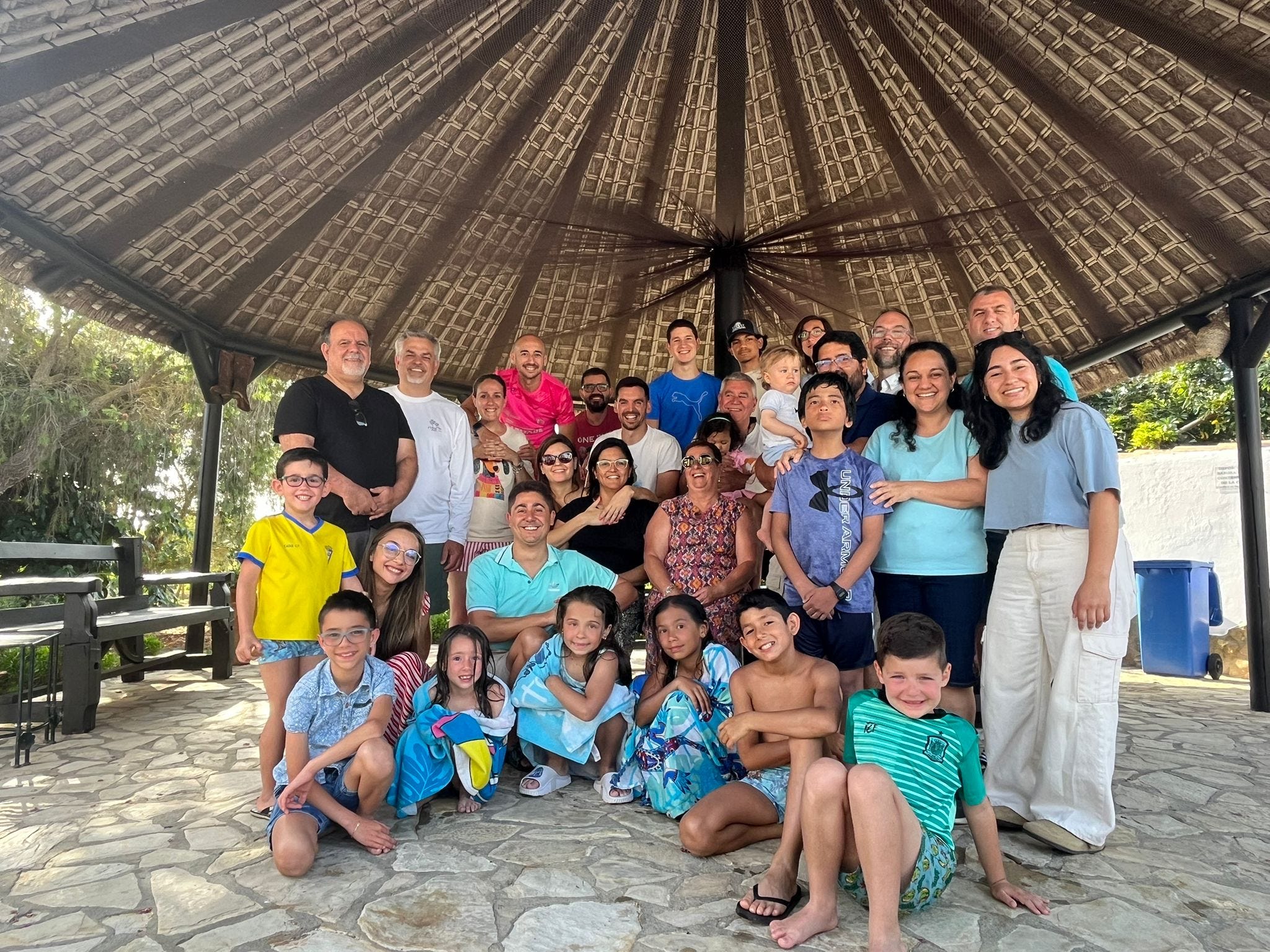
[I just returned from a trip to Spain where I met up with a few other key leaders from Europe to discusss and strategize about how to plant and multiply churches as extended family networks across their regions. The church there on the southern coast of Spain hosted us and participated with us in the four days together. This is a quick report that I wrote to my churches in New Jersey/NYC area about my time there.]
I thought it was worth pausing to reflect and write about the trip I just made to visit a church on the southern coast of Spain. Only a few times have I experienced a church community who shares their lives together as an extended family (sharing them with one another, with their cities, and with other churches around the world) that it is worth pausing to reflect on and write about. Please do not misunderstand me, I have seen many churches along the way talk about being a family, use familial language and add specific programs and ministries to their agendas to try and emphasize the concept of family, but very few who actually live as extended family networks as a way of life. Some make valiant attempts in that direction, but many of those churches give up along the way, arriving at the conclusion that it is not possible (or maybe is unnecessary?) in our day and age. Roland Allen spoke to this over a century ago when, as a missionary to China with NCM, he observed it among the missionary efforts and churches of the late 19th and early 20th centuries.
"When these false and partial attempts at imitating the Apostle’s [Paul’s] method have failed, men have declared that the apostolic method was at fault and was quite unsuited to the condition and circumstances of present-day missions. The truth is that they have neither understood nor practised the Apostle’s method at all.” - Roland Allen
While I am grateful to Allen for recognizing this and articulating it in his writings, I have seen little evidence that he did anything in his time to reshape the practice of churches or the missionary enterprise. Perhaps it was too great a task to accomplish in his lifetime. However, our time is ripe for this sort of change. We are living in the middle of the sort of macro-paradigm change that occurs only every few centuries. Christendom is waning and while some face anxiety over what comes next, and others are turning away in disillusionment from its remaining vestiges, a few have begun to recover the tradition of the early churches which remained the dominant Christian tradition for nearly three centuries. These small communities of believers recognize the importance of ordering their lives and addressing their situations according to Christ’s household plan in order to build a solid base of expansion for the gospel in their neighborhoods and cities while simultaneously working with key leaders (and their teams) to help shape a unified movement of churches in The Way of Christ and His Apostles, via plans that include a focus on global cities, investing deeply within and across civilizations, and throughout diaspora communities around the world.
I have begun encountering these type of church communities (similar to the one I wrote about last summer1), made up of people who are sincerely dedicated to reshaping their hearts around a deep devotion to one another as Jesus’ family; fully committed to reshaping their lives around Christ’s plan and household order; and they have understood that the key to doing this is to work hard together at reshaping their thinking around the Apostles’ teaching. A common theme I have noticed is that wherever these sorts of communities are thriving, there is always a key apostolic-type leader who is driving this work among them, connecting them to a network of other churches with the same commitment, and there are also numerous shepherding leaders being trained to continue that work in the lives of the churches that are established.
In the West today, particularly in the United States, we live in a “call-out” culture which leads many to assume that life is a zero-sum game where we can empower ourselves and our “affinity groups” by publicly exposing the shortcomings of “outsiders” rather than addressing them in constructive, useful ways to help create stability and maturity, in the churches and in our cities. Others assume a strategy of duck-and-cover, waiting for the difficult season to pass them by. The problem there is that we know from the Scriptures that we can expect things to become more difficult, not less.
These responses do not reflect the plan of Christ.
In Spain, I saw a group of 10 or so families (regular people with regular jobs and regular lives) who have done more to embody Christ’s plan and Paul’s methods in their community, than many churches with 100x the people and resources.
I like to say…
Give a man a fish, and you make him dependent on you.
Teach a man to fish and you make him independent.
But teach a man how to teach others to fish, and you create exponential interdependence.
This is what Paul is doing with Timothy in 2 Tim 2:1-2. Paul spent 20 years investing in life-on-life training of Timothy to continue the work of establishing churches around Christ’s plan. Now, Timothy is to do the same across two additional generations of leaders so that Christ’s plan is passed on perpetually, along with the multiplication of churches, until Jesus returns.
This small group of people on the southern coast of Spain have reordered their entire lives around a set of patterns so that they are able to naturally help stabilize and strengthen those in their communities, and to engage in a plan to send gifted leaders to other key cities in Spain and Europe to plant new churches or help other churches become better prepared to do the same thing in their own contexts. (Including releasing the gifted leadership couple who has spent the last 10 years of their lives investing in building this church family) Over the course of our time together, I watched as that key leader came to understand his role as not only to Latin/Spanish speaking cultures, but as being key to the work across Europe. This was evidenced even in our time together, as their influence went well beyond Spain to help other leaders across Europe, and even beyond the European field by helping shape my own understanding and plans for our small cluster of churches in Northern New Jersey.
I walked away with a clearer understanding of what is required of apostolic-type leaders in the early stages of establishing a cluster of churches who will live as an extended family network. And this has helped me in thinking about how to shape our churches here in New Jersey.
Apostolic-type leaders, and their wives, must be heavily invested in the regular family life of their key leaders in daily, weekly and monthly patterns, in intentional planned and spontaneous ways. This is the context for life-on-life apprenticeship.
Everyone must make the space for and be committed to ordered learning, so that the content of the New Testament (a.k.a. the documents of Jesus’ New Covenant) is being seriously considered, accurately understood, processed and integrated into their lives and habits, with leaders setting the example. This is the context for discovery, clarity and implementation.
There must be assessment and addressing of any cracks or issues in the lives of the key leadership families and those issues must be corrected and brought into alignment with Christ’s plan first. You cannot successfully lead a church family, if you have not figured out how to lead your own household.
All the leaders must build a new set of habits for personal development, leading their families, and shepherding churches, built around a set of convictions, and a clearly articulated plan, and those must then be put into one another’s calendars, otherwise this will only live at the level of good intentions.
Apostolic-type leaders must balance pushing young leaders to learn, adjust, and mature while being patient with them throughout the process; developing a skill to measure and assess their progress.
Aside from a new understanding of my own situation, I also walked away with a new branch added to my extended family (and by extension, to those in my local church situation as well.) By inviting us into their homes and lives for four days of meals around the table, and both structured and informal discussions (not to a conference in a church building), we simultaneously achieved clarity in our thinking, planning for our situations, and meaningful, lasting relationship. Here is the text I sent to this church as I was waiting at the airport for my return flight home.
It is easy to underestimate, and difficult to put into words the significance of a small group of believers who understand Christ’s plan and who are committed to shaping their entire lives around it… together… and are committed to sharing it with those in their cities, with other churches around the world, and with other cities and civilizations, but that is exactly what I see in all of you there in the [southern coast of Spain]. What I experienced with all of you was so much more than a “missionary trip”, it was a visit with extended family to encourage one another, embolden one another and strengthen one another. You were not just ‘like’ family for the few days we were together, but we are now truly one another’s extended family from now on.
The effect you all have is well beyond your own homes and lives, but that is only possible because you have ordered your homes and lives around Jesus’ plan.
Thank you for hosting and sharing that with us, and for being a model for us. I love you all. Until the next time we see one another, continue to strengthen one another, and make the most of your opportunities.
It would be easy to assume that I wrote this from an emotional state of mind at the end of a long trip to an exciting new location… fair enough. If that is your initial impulse, it is not entirely wrong. I was tired and emotional. I get your point. We can feel all the feels and share all the hugs and tears, but unless we also make all the changes that need to be made, those hugs, tears and emotions will not amount to anything more than a satisfying release. But this was more than just an emotional moment. The things we discussed, the commitments and plans we made to continue on and to see one another again, the depth of the transparency we shared about our lives and situations, the clarity of mind that came to each of us during our conversations, and the excitement and passion that was generated to continue the work in each of our own situations is something that will last and will continue to carry our relationships, and the progress of the gospel forward, together. Those of you who know me well, know that I will continue my discussions with their church via emails, Zoom meetings, and texts, and will continue to use that new understanding to help our churches become mature and begin to expand in our own neighborhoods.
So far, all the things I have mentioned were things I expected to happen on this trip. I expected to become a part of one another’s extended families. I expected to have new insight and understanding about how to shape the churches here in New Jersey. I expected us to encourage one another, embolden one another, and strengthen one another. What I didn’t expect was Katherina.
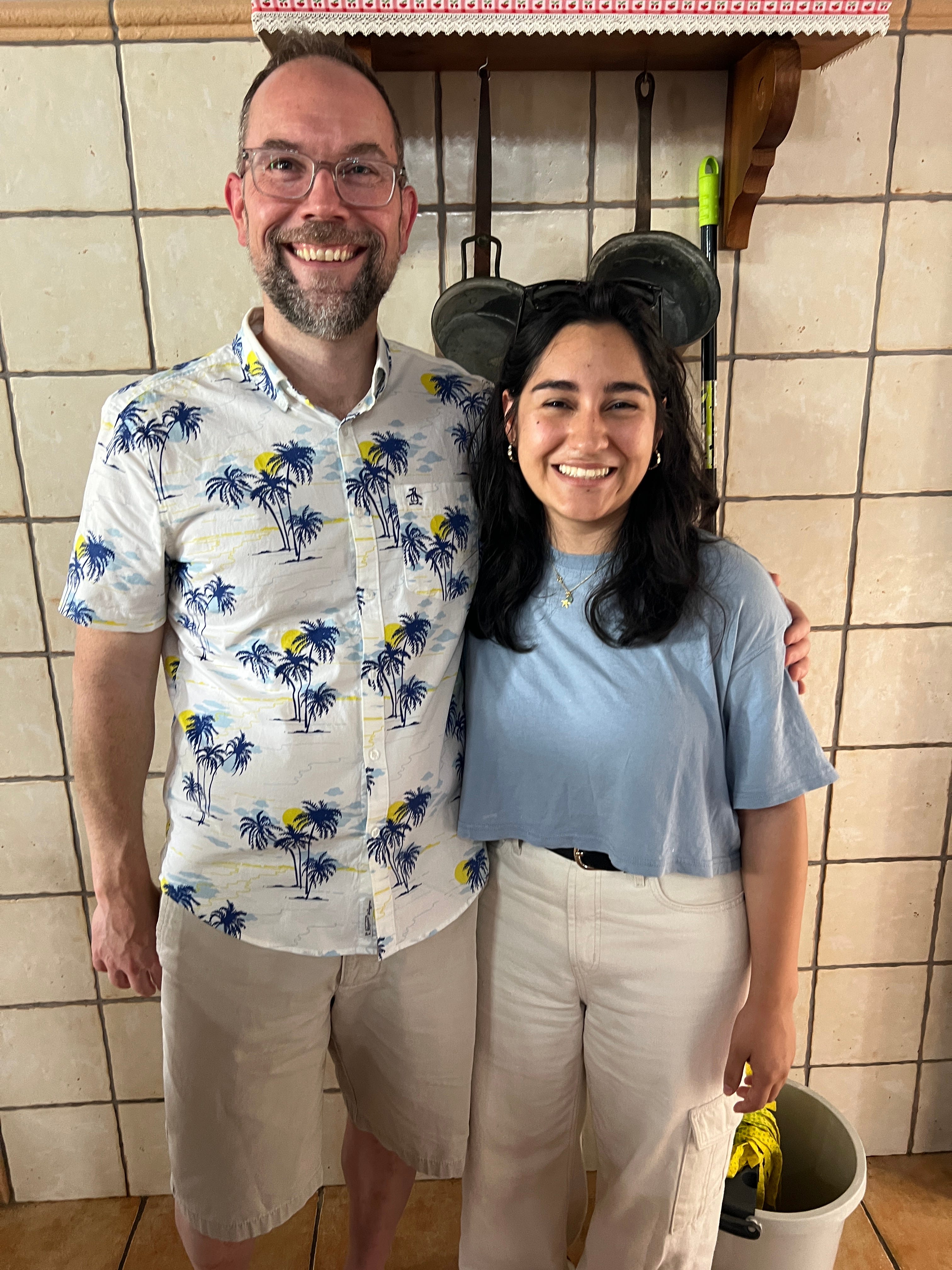
Katherina is the daughter of the key couple who moved from Guatemala to Spain to plant churches more than ten years ago. I met her briefly a few months ago at the Summit in Ames, Iowa, but didn’t have the opportunity to spend much time with her. However, while I was in Spain, she repeatedly engaged me in conversation about the ideas we were all discussing and about my own life and family. She also spent a significant amount of time telling me the stories of their church, and carefully explaining Spanish culture and language. She worked tirelessly, alongside her mother, to interpret between English and Spanish so everyone in the room could understand one another.
During one of our conversations, Katherina shared a bit of her own story with me.
When their family moved from Guatemala to Spain, she was young and initially her dad became a pastor in an existing traditional church there. Her experience in that church completely turned her off to continuing in the faith. At 15 she told her parents that when she turned 18, she was planning to leave Spain and leave the church. Nothing she had experienced there made her want to continue with either. However, after her father discovered and began to understand and implement the Apostles’ teaching, shaped around the patterns of the early church found in Acts, things began to slowly change for their family. Her parents intentionally invested in shaping their own household around Christ’s design, her dad left his job as a pastor, and as a family they began investing themselves in one another, in the lives of other key young families around them, and in the lives of their neighbors. Over time, their efforts and commitment turned into a cluster of three simple churches that gather weekly around a meal and discussion so that they can work together to better understand the Apostles’ teaching and implement it in their own lives. There have been challenges along the way, but they have weathered those and worked hard to become fully established churches. Now, they are so well established that her father is looking to move to a new area and do a similar work because he knows the churches here on the southern coast will continue to grow and multiply functioning as a base for his expansion work, and that he will have the opportunity to continue speaking into their lives from wherever he is. Because of her parent’s faithfulness and hard work, and because of the faithful community that has developed around them, Katherina is now fully committed to being part of the church family there and helping them in the work that needs to be done in the area. She would also would like to stay in Spain and work toward influencing their public education system, which will be no easy task.
As I told Katherina before we left, I now consider her my “adopted daughter” in the Lord… mi hija adoptiva. Her family will come to visit us here at some point in the next year or so, and she may even come on her own before that. I look forward to introducing her to our churches in the NYC area so that they can enjoy the blessing of conversation with this remarkable young woman.
I have many other stories and other details to go into, but this is the summary of my time in Spain.
So… as I said to the church in Spain, I say this to our churches in the NYC region…
I love you all. Continue to strengthen one another in patterning your lives around the Apostles’ teaching, and make the most of your opportunities.